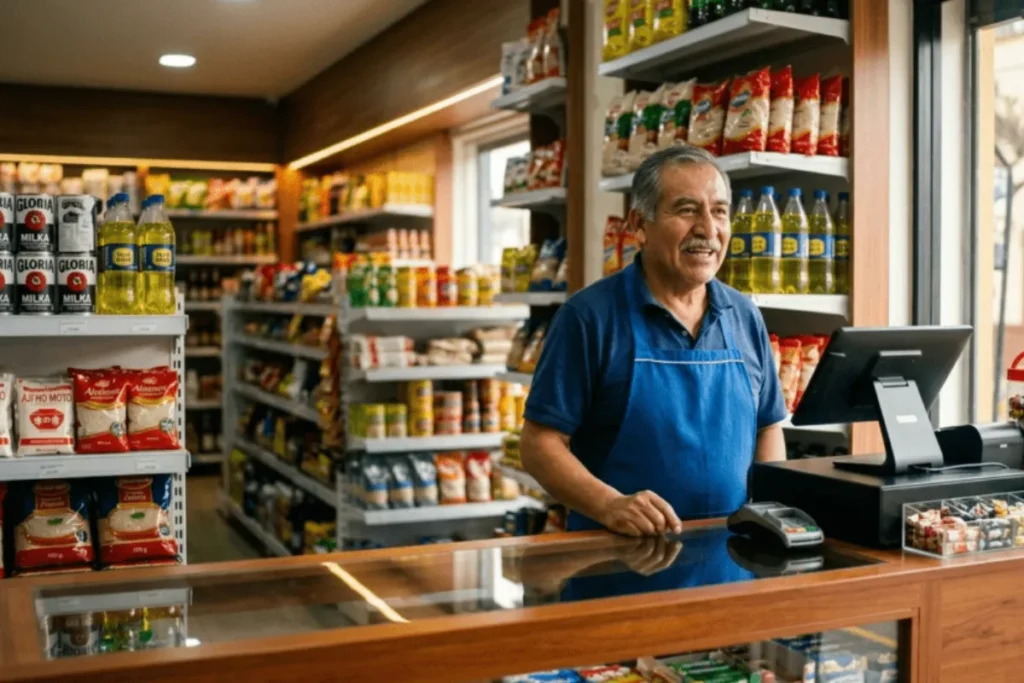
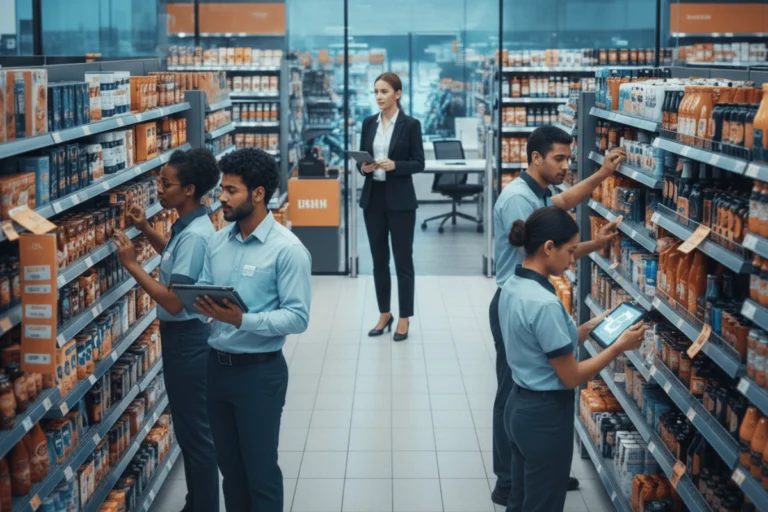
Tens of thousands of warehouses, mini-markets, and neighborhood stores. Teams of field sales reps. Distributors with their own logics. Commercial conditions that change by zone, by customer, by week.
That is the traditional channel in Latin America. And it is also, for many consumer goods companies, the highest-billing channel and the worst-managed one.
Not for lack of resources. But because most organizations still apply processes designed for another context, another speed, and another level of complexity.
In 2026, managing commercial execution in the traditional channel with tools from ten years ago is not just inefficient. It is a real strategic risk.
The channel that keeps growing in complexity
The traditional channel is not disappearing. On the contrary: it remains the main shopping point for millions of consumers in urban and peripheral areas of LATAM, with structural advantages that modern retail cannot easily replicate.
- Territorial capillarity that no chain covers
- Proximity to the consumer and frequent replenishment purchases
- Penetration into segments and areas where the supermarket does not reach
- Assortment flexibility and pricing based on local context
But those same advantages create the main operational pain point: scale and fragmentation. When you have thousands of active points of sale, multiple distributors, and salespeople managing huge territories, visibility becomes a serious problem.
And without real visibility, commercial execution in the traditional channel is managed by intuition.
The mistake of copying the modern retail model
One of the most common patterns in large companies: trying to apply the same management logic to the traditional channel that works with supermarket chains.
In modern retail, information is centralized. There are direct integrations, reliable sell-out data, and visible inventories. The system works because the channel is structured to share data.
In the traditional channel, the reality is different:
- The information arrives filtered by the distributor
- The refresh rate is irregular or nonexistent
- Point of sale visibility depends almost exclusively on the field salesperson
- Conditions vary so much between stores that a standard model does not scale
Applying modern retail tools to the traditional channel does not generate control. It generates a false sense of control. And that is worse.
When information arrives late, the sale is already lost
Many organizations still operate with weekly reports, Excel consolidations, and data that arrives days or weeks after the problem occurred in the market.
The practical result is always the same:
- Stockouts that are detected after they have already impacted sales
- Growth opportunities that no one identifies in time
- Unfocused sales visits, where the salesperson decides who to visit based on intuition
- Reactive field teams instead of prioritized ones
In a channel where the competition can react quickly and where the consumer has alternatives just yards away, speed of decision-making is not an advantage. It is a baseline requirement to compete.
The new complexity that nobody was expecting
If the traditional channel was already complex, recent years have made it even more demanding. Today, consumer goods companies face a combination of pressures in this channel that did not previously coexist:
- Greater competition among brands for the same shelf space
- Price-sensitive consumers who switch brands with less friction
- Shorter promotion cycles that are harder to execute consistently
- Pressure on field team productivity
- Need for faster decisions with more fragmented data
This context makes the reactive management model unsustainable. And it is the starting point for understanding why commercial execution in the traditional channel needs a qualitative leap.
From retrospective reports to smart execution
The first step most organizations take is to improve visibility: dashboards, more frequent reports, and the integration of distributor data.
It is necessary. But not sufficient.
Visibility without action is just problem documentation. The next step, which is where impact is truly generated, is turning that information into concrete operational instructions for the field team.
Managing commercial execution in the traditional channel in a modern way involves four things:
- Identify opportunities with real impact
Not all deviations deserve a visit. The key is to rank problems by sales recovery potential, not by the volume of available data.
- Prioritize points of sale, not territories
The salesperson cannot visit every store in their area every day. They need to know exactly which store to visit today and why that one first. That requires a prioritization model, not a map.
- Translate the analysis into actionable tasks
«SKU X fell to 15% in the northern zone» is not an instruction. «Store Y—check the facing of SKU X—probable cause: stock-out» is. The difference between the two is the difference between visibility and execution.
- Measure if the problem was resolved
The cycle does not close when the recommendation is issued. It closes when it is confirmed that the task was executed and that the impact on sales was as expected. Without that loop, there is no organizational learning.
The role of technology: to guide, not just to measure
The global retail analytics market exceeds $6 trillion and is growing at a double-digit rate Mordor Intelligence. But in the traditional channel, most of that investment is still in visibility, not in execution.
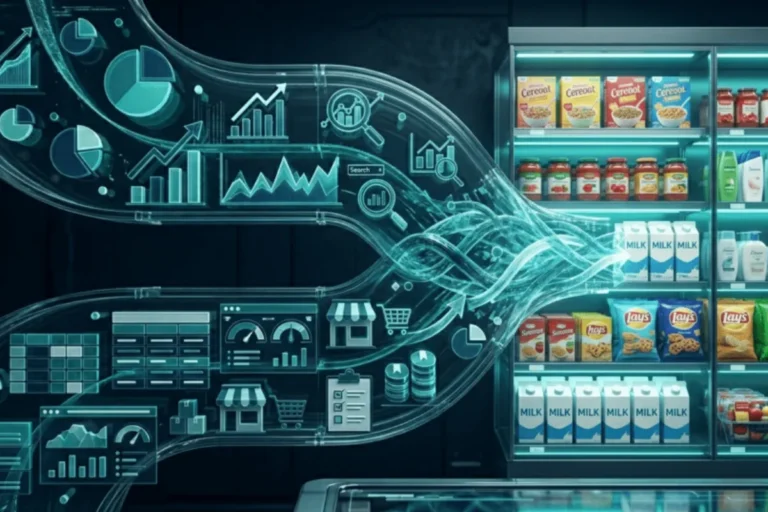
The technology that truly moves the needle in this channel is the one that connects three things in a single workflow: point-of-sale data, intelligent prioritization, and tasks assigned to a specific person.
Artificial intelligence plays a specific role in that workflow:
- Detect anomalies before they escalate: imminent disruptions, atypical sales drops, stores at risk
- Automatically rank the points of sale by recovery potential
- Reduce the supervisor's analytical burden so they can focus on managing, not interpreting reports
- Learn from historical behavior to improve recommendation accuracy
Technology does not replace the sales team's judgment. It frees it up to apply it where it matters most.
It is the approach that guides solutions like Teamcore's: transforming distributor and point-of-sale data into prioritized and measurable tasks for each member of the field team.
2026: Execution is the new differentiator
According to Gartner, 84% of marketing leaders report high levels of strategic dysfunction (Gartner, 2025). In the traditional channel, that dysfunction materializes right there: between the strategy defined in the boardroom and what actually happens in the thousands of points of sale.
Companies that manage commercial execution well in the traditional channel do not necessarily have better strategies than their competitors. They have better systems to ensure those strategies reach the point of sale intact.
In an environment of tight margins and growing competitive pressure, that capability is worth more than any trade marketing campaign.
In 2026, the advantage won't be who has the best strategy for the traditional channel. It will be who manages to execute it better in 50,000 stores at the same time.
Where to start?
If you manage trade marketing or sales in consumer packaged goods and the traditional channel is still critical to your business, the question is not whether you need to improve commercial execution. The question is how much it is costing you not to have done so yet.
We can show you how it works in practice: from data to the task at the point of sale.